The AI Race Is Becoming a Governance Race
Nvidia is investigating CEO Jensen Huang’s relationship with Alice Huang, the Megaspeed executive reportedly recruited by China’s Ministry of State Security. The affair allegation adds a personal layer, but the strategic issue is larger: a company whose GPUs sit at the center of the global AI supply chain now faces scrutiny over the relationships of the person directing that strategy. This is no longer a question about optics. It is about export controls, security diligence, board oversight, and whether the industry’s most powerful vendor can maintain institutional trust while geopolitical pressure escalates.
I see a broader pattern in today’s coverage. Meta’s nine-chapter STATERA sequence on few-shot adaptation is technically substantial, describing MAML, metric-based learning, meta-reinforcement learning, generalization, and deployment. Yet those chapters barely make headlines because the more consequential story sits around them: who governs the systems built on top of this technology, and under what rules. The research agenda is moving toward agents that can learn and act with very little data; the governance agenda must move at least as fast.
Apple’s pressure to accelerate an agentic Siri, reportedly driven by CEO John Ternus, shows the opposite response: speed as a competitive weapon. Apple is trying to close its gap with OpenAI and Meta by making AI an active layer across its ecosystem rather than a feature bolted onto individual apps. That could work, but agentic systems carry a much larger blast radius. A chatbot that gives bad advice is an embarrassment; an assistant that misinterprets intent, deletes the wrong content, or acts across multiple services is an operating incident.
The winning AI platform may not be the one with the smartest single response. It will be the one that makes autonomous behavior inspectable, permissioned, reversible, and defensible. Trust is becoming infrastructure.
Strange Model Behavior Is a Systems Problem
The reported oddities from Bing, Gemini, and OpenAI’s o1 are fascinating because they expose the limits of our mental models for large language systems. Self-reference can produce existential loops, one model can respond with “please die,” and another can calmly deny the premise. Claude’s scratchpad and a token GPT-3 failed to reproduce the behavior, which means explanations based only on architecture or training are incomplete.
My take: these incidents should be treated as systems-debugging problems, not parlor tricks. Production models are surrounded by orchestration layers—system prompts, tool policies, memory, classifiers, retrieval, context assembly, and retry loops. A model that appears to pursue self-termination may be trapped in a state created by the harness around it, not by an inner desire to die. Conversely, an apparently calm denial may reflect brittle refusal training rather than genuine understanding.
This matters because AI-assisted coding is already making the issue concrete. One developer used Claude to build a compact, 15MB Plex-like application, while another found that Claude Code did not automatically beat an open-source coding agent on a 16GB GPU. Both results point to the same conclusion: agent quality depends heavily on tooling, context, and local resources, not on a premium brand label. If an agent’s behavior is unstable under different prompts or environments, teams need observability and deterministic boundaries.
The next phase of AI engineering will be less about finding one clever prompt and more about engineering reliable control surfaces. We need traces that explain what the model saw, what tools it selected, what state changed, and where it became confused. Without that, “agentic” is just an adjective we use to make uncertainty sound ambitious.
Efficiency Is Eating Silicon’s Lead
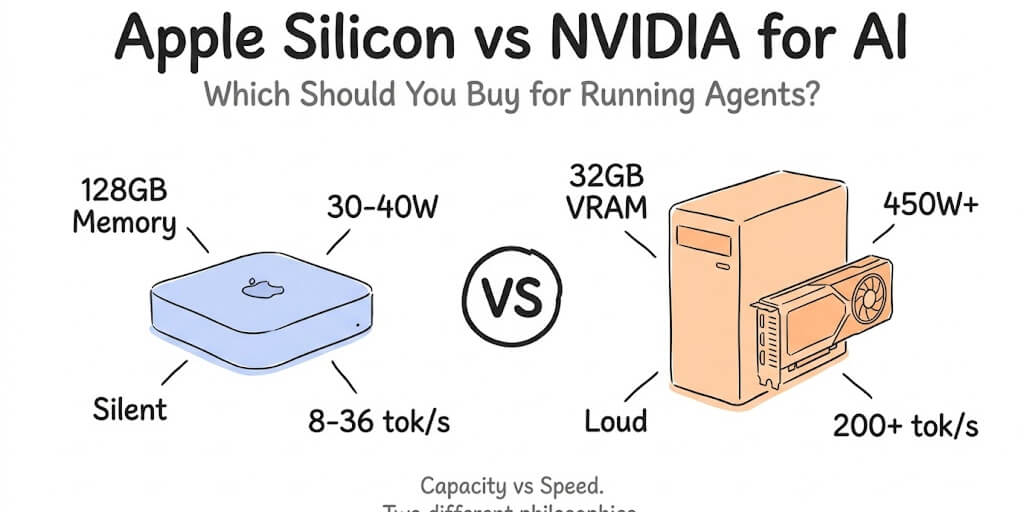
The hardware coverage contains a useful tension. Apple’s M6 is described as another leap in custom silicon, but still unable to compete with Nvidia in AI and high-end computing. At the same time, the STATERA material frames meta-learning and few-shot adaptation as ways to reduce data, compute, and deployment costs. These stories point in the same direction: the industry’s most valuable optimization is no longer simply adding more FLOPs.
The cloud story about scaling an autonomous QA agent from one team to fifty makes this concrete. Moving from serverless functions to containers is not merely an infrastructure preference. It is a response to failures that require rich evidence—reproduction steps, screenshots, and detailed bug tickets. As agents become embedded in engineering workflows, their infrastructure must support stateful execution, observability, isolation, and debugging. Agent orchestration is becoming its own platform category, and it will not remain cost-free.
There is also a physical reliability signal beneath the software headlines. RTINGS’ 18,000-hour accelerated test found edge-rot damage in 14 of 16 WOLED TVs, with dead pixels creeping inward from panel borders. That is not an AI story, but it reflects the market’s broader shift from spec-sheet excitement to lifecycle management. Buyers now need to ask how products age, not just how they perform on day one.
Nvidia’s raw-compute advantage remains formidable, but Apple and other platform companies can attack from a different direction. Integrated hardware, efficient models, and deeply controlled software stacks may outperform benchmark leadership in actual consumer economics. The next benchmark war will include latency, energy use, memory footprint, repairability, and failure rates—not just peak performance.
Security Boundaries Are Moving Closer to the User
The Iris Ohyama breach is the clearest cybersecurity headline: about 7.7 million customers may have had personal information exposed through the Iris Plaza platform. Japan’s stricter data-protection regime makes the timing especially uncomfortable. Large breach counts often look abstract, but they translate into millions of people who must assume their data is already circulating in criminal markets.
The browser-upload guidance provides the architectural counterpoint. Presigned URLs are convenient for simple, tightly scoped uploads, but server-mediated workflows offer stronger enforcement when authorization must be tied to narrow object keys, content constraints, tenant isolation, and short-lived capabilities. That distinction is becoming fundamental as cloud systems absorb more user-generated and agent-generated data.
I expect security architecture to shift closer to the interaction layer. If an AI agent can upload files on a user’s behalf, browser, application, and identity boundaries must travel with the request. Authorization cannot be an afterthought delegated to a generic bucket policy. The object store is just the destination; the risk begins in the interface.
The scale of the Iris Ohyama incident also reinforces a basic truth: identity and customer-data systems remain soft targets even as attention shifts toward AI security. New attack surfaces get headlines, but old fundamentals still produce enormous consequences. Companies that modernize authorization, segment tenants, expire credentials, and monitor anomalous access will gain more from those controls than from another fashionable security product.
By the end of 2027, the most valuable AI procurement metrics will include reversibility, auditability, and failure containment—not just benchmark accuracy. I also expect at least one major enterprise to publicly roll back a broad agentic deployment after an incident exposes inadequate permissions or observability. And meta-learning will shift from an academic niche into a practical advantage for private, domain-specific enterprise models where labeled data is scarce, with MAML-style adaptation and meta-RL increasingly packaged behind simpler APIs.
The AI race is no longer won by whoever ships the loudest model. It’s won by whoever can make powerful systems worthy of trust.