The Three Signals You Shouldn't Ignore
I've been tracking AI infrastructure news for over a year, and this week produced an unusual cluster of signals that all point in the same direction. First, Sigil Wen's Underdog launched as a direct competitor to Instinct and Muse, with the entire pitch built on one radical premise: your conversations never leave your device. That's not a feature—it's the product. Second, Google released EmbeddingGemma 2, a multimodal embedding model that handles text, images, video, audio, and code in a single open-weights package, and it runs with just 191MB of RAM. Not 191GB. Megabytes. Third, an independent developer demonstrated that a 24GB M5 Mac can comfortably run Qwen3.5 9B through Ollama, with Copilot and Smart Connections integrated for what amounts to a complete private AI stack.
These aren't isolated events. They're converging evidence that the economics and engineering constraints that pushed everything to the cloud are dissolving. The hardware is finally capable. The models are getting small enough. And consumers—who have spent the last three years watching their data get scraped, resold, and breached—are developing a taste for products that promise local processing as a feature, not a limitation.
The venture capital ecosystem noticed. Wen's Underdog is backed by top Valley investors who are explicitly betting that privacy-as-a-product will win consumer trust in ways that subscription-based data harvesting cannot. That's a remarkable shift in sentiment for a market that has, until now, treated user data as the primary revenue model.
What Changed: The Hardware-Software Inflection Point
To understand why this moment is different, you have to understand the constraints that kept AI tethered to data centers for the past five years. The first constraint was model size. GPT-3 was 175 billion parameters. You weren't running that on a phone, and you weren't going to for a long time. But the second wave of model design—distillation, quantization, and architectural innovation—has produced models that punch dramatically above their weight class. EmbeddingGemma 2 at 308M parameters matching models twice its size isn't an incremental improvement; it's a phase change.
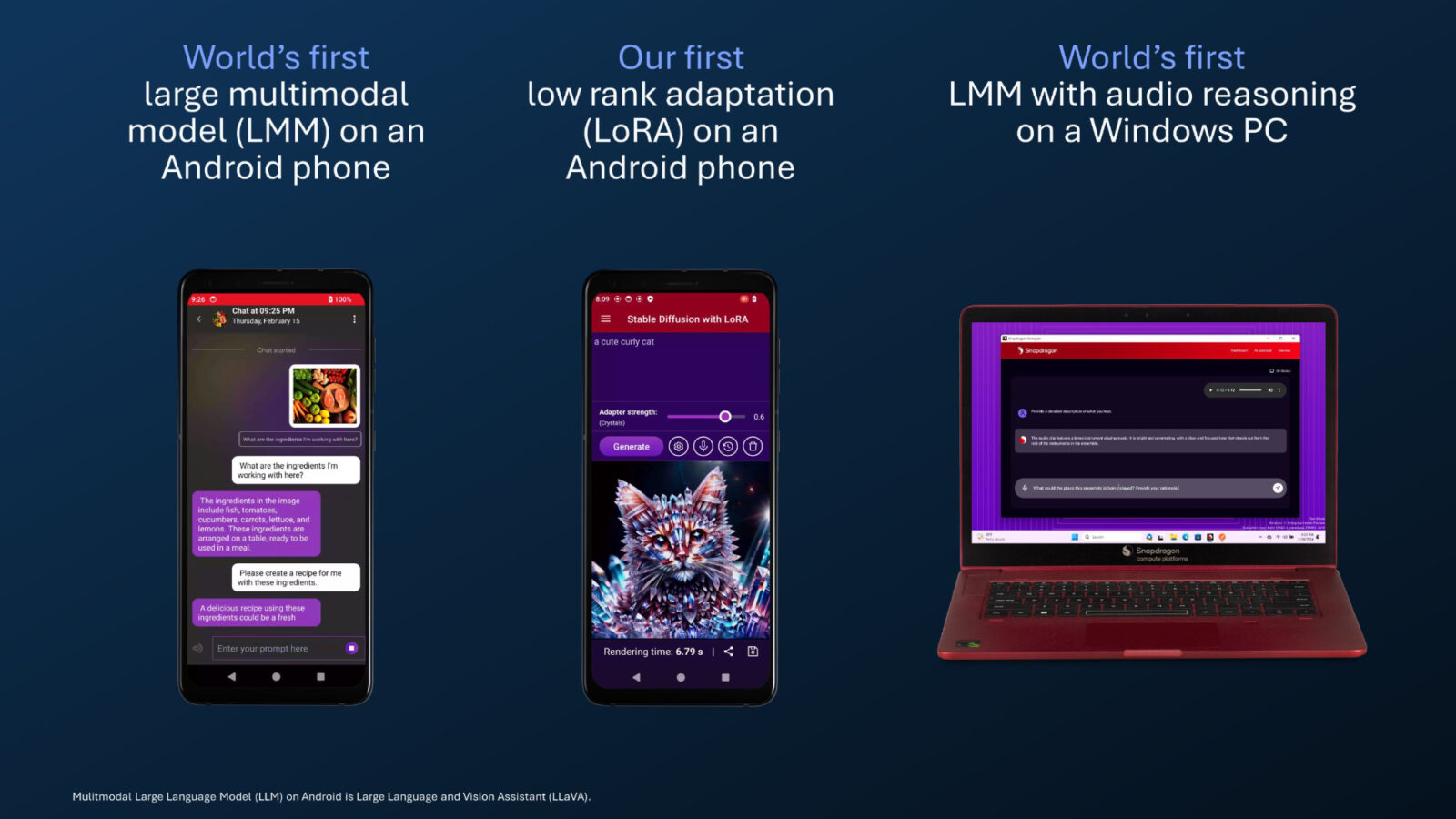
The second constraint was memory. Even efficient models needed substantial RAM to hold weights, activations, and context. But Apple's unified memory architecture, Qualcomm's recent Snapdragon X series, and the sheer density of modern mobile DRAM have changed the math. When a 308M-parameter model can run in 191MB of RAM, the 'but my phone can't handle it' objection evaporates.
The third constraint was developer ergonomics. Setting up local LLMs used to require command-line wizardry, CUDA toolkit installations, and a willingness to debug dependency hell. Ollama changed that. Copilot integrations changed that. Smart Connections for Obsidian changed that. The developer quoted in this week's coverage explicitly notes a 'critical Ollama setting most guides overlook'—which means the ecosystem has matured enough that people are writing about advanced configuration, not basic setup.
We're past the proof-of-concept phase. On-device AI is now a viable product category with a real developer ecosystem, real funding, and real consumer demand.
The Business Model Disruption Nobody Is Talking About
Here's where it gets interesting—and where I think most analysts are missing the real story. The cloud AI business model depends on a simple equation: users trade data for convenience, and providers monetize that data through API resale, training improvements, and targeted advertising. It's the same model that built Google Search and Facebook. On-device AI doesn't just disrupt the technology stack—it breaks the revenue model.
When Wen pitches Underdog as 'no-data-subscription resale,' he's explicitly telling investors: we are not going to do the thing that makes cloud AI profitable. That's a bet that consumers will pay for privacy directly, either through subscriptions or through the value exchange of free products that don't harvest their data. It's a model that has worked for Signal, for DuckDuckGo, and increasingly for Apple's entire product strategy.
But there's a second-order effect that's even more important. If AI assistants run locally, then the API revenue that OpenAI, Anthropic, and Google have built—charging per token for inference—evaporates for a growing class of workloads. Embedding models are particularly vulnerable. If Google gives away EmbeddingGemma 2 as open weights and it runs on a developer's laptop, the Cohere and OpenAI embedding APIs have a serious pricing problem. They can compete on quality, but they can't compete on cost when the marginal cost of local inference is effectively zero.
This is why Google's release is strategically brilliant. They're hedging their own cloud business by ensuring that if on-device AI wins, Google is the platform it runs on. EmbeddingGemma 2 isn't a gift to developers—it's a moat.
What's Next: The Authentication and Capability Race
The on-device AI moment creates two immediate battles. The first is authentication. As the news this week about AI agents facing anti-bot defenses makes clear, even if you have a perfect local AI assistant, it still needs to interact with the web—and the web is increasingly hostile to automated access. The standoff between AI agents and website defenses will define the next 18 months of agent development. On-device AI doesn't solve this problem; it might even make it worse, because now every consumer has the capability to deploy agents that can shop, book, and reserve.
The second battle is capability parity. Cloud models are still ahead on raw reasoning, long-context understanding, and multimodality. EmbeddingGemma 2 handles five modalities, but it does so at 308M parameters—that's embedding work, not generative reasoning. The gap between what a 9B local model can do and what GPT-5 or Claude Opus can do is still substantial for complex tasks. The on-device ecosystem needs to close that gap, and the path is through specialization rather than scale.
Expect to see domain-specific local models—legal, medical, coding, creative—that trade generality for capability within a narrow domain. The 'general assistant on your phone' is a 2027 story. The 'specialized expert that never sends your data to the cloud' is a 2026 story, and it's already shipping.
By Q2 2027, I expect at least three major consumer AI products to ship with explicit 'data never leaves your device' marketing as their primary differentiator—not a bullet point, the headline. The open-weights embedding model space will consolidate around two or three dominant architectures by end of 2026, with Google's Gemma family positioned to win on developer mindshare. The real disruption won't come from another chatbot; it'll come from local AI being embedded into productivity tools, browsers, and OS-level features in ways that make cloud AI feel like a deliberate choice rather than the default. Companies like Apple, which have been quietly building Neural Engine silicon for years, are about to look very prescient. The cloud AI giants will respond by pushing hard on capability gaps—longer context, better reasoning, agentic workflows—and by acquiring the on-device startups they can't build internally. Watch for a major acquisition in the on-device AI space within the next six months.
The cloud won the first round of AI because the hardware demanded it. The hardware has changed. The winners of the next round won't be the companies with the most data—they'll be the companies that convinced users they didn't need to give it up in the first place.