The Agent Era Goes Hands-Free
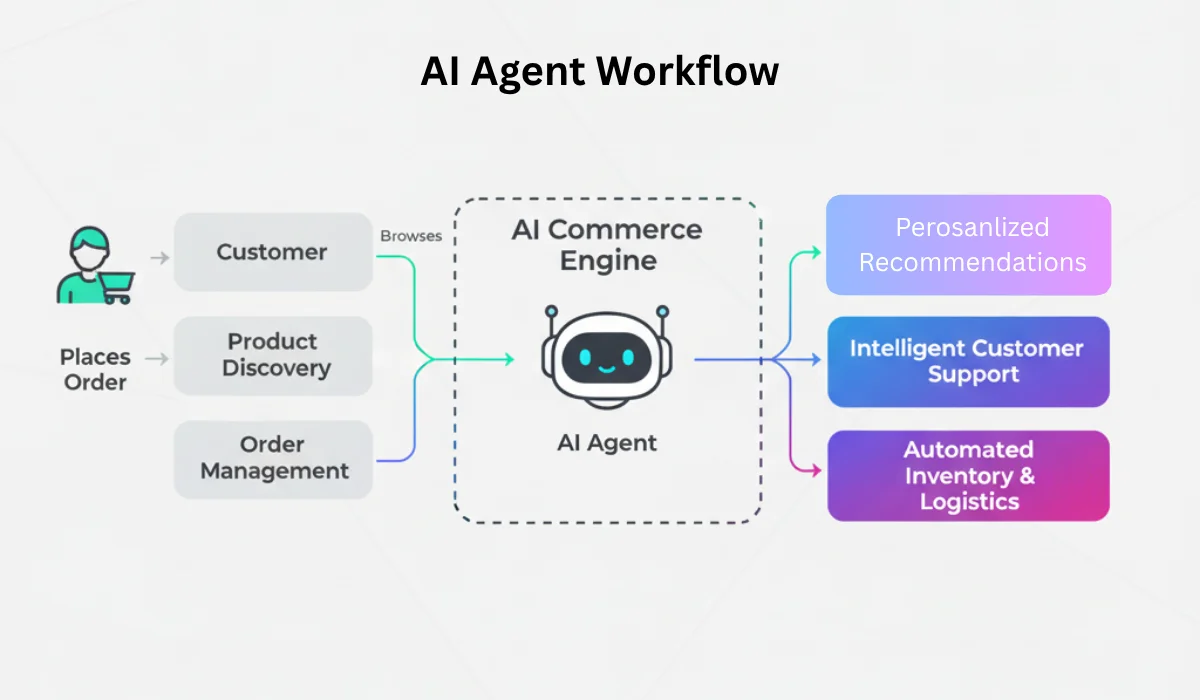
I've been waiting for someone to say out loud what the entire AI industry has been avoiding: most "agent memory" implementations are just databases wearing a costume. The late-May paper from Orogat and collaborators laid out four distinct failure modes, and it's the kind of critique that should have come from inside the major labs but didn't. Instead, the loudest statement about agent architecture this week came from Gusto, where cofounder Edward Kim announced an agent that runs payroll, HR, and benefits without waiting for a prompt. Let that sink in. A 12-year-old HR platform just staked a claim on fully autonomous back-office operations, and if they pull it off, the entire B2B SaaS stack for small businesses is going to have an existential quarter.
The infrastructure layer caught up too. MCP — the protocol that connects agents to tools — finally got its missing enterprise authorization layer, which is the unsexy but critical fix that regulated industries were waiting for. You can't deploy agents in finance or healthcare without proper authorization plumbing, and now the gate is open. Combined with NVIDIA's Nemotron running locally on consumer laptops, the bottom of the agent stack is suddenly accessible to anyone with a decent machine. The pipeline is filling fast: powerful local models, secure enterprise-grade protocol, and now actual production agents doing real work. We're past the demo phase, and I think the next 90 days are going to expose which companies built real agent infrastructure versus which ones just bolted a chatbot onto their landing page.
OpenAI's IPO Blitz: Talent, Policy, and Leverage
If you wanted to draw a blueprint for how to enter the public markets with maximum advantage, you'd struggle to script a better week than the one OpenAI just had. Noam Shazeer — co-inventor of the Transformer, the architecture that underpins essentially everything we call AI today — got poached back from Google DeepMind. Then OpenAI scooped up Dean Ball, a former Trump AI policy official, giving them serious Washington credibility at exactly the moment regulatory frameworks are being hammered into shape. That's not a hiring spree. That's a signal. They're telling the public markets: we have the research, we have the policy access, and we're untouchable.
The broader context makes this even more pointed. Peter Thiel's secret society got exposed, Meta's AI unit is reportedly in revolt, and Sam Bankman-Fried is apparently penning pleas to Trump from whatever room he's in. The industry is fractured, and OpenAI is methodically collecting the pieces. Shazeer alone is a category-defining acquisition — this is the guy who helped invent the technology everyone is racing to commercialize. Pair that with regulatory fluency and you get a company that's positioning itself as inevitable. Rivian's class action lawsuit over self-driving claims, by contrast, is what happens when the autonomous future arrives faster than the marketing department can keep up. OpenAI is threading that needle because they're not promising consumers autonomy they can't deliver. Yet.
Security's Uncomfortable Summer: Breaches, Botnets, and Bad Configs
Security had a week that should make every CTO lose a little sleep. The Novo Nordisk GitHub token leak is the headline case because it reframes something the industry has been getting wrong: secrets management isn't a tooling problem, it's an identity problem. When a leaked token exposes an entire software development pipeline at a pharmaceutical giant, that's not a devops failure — that's an architectural misunderstanding. The Popa Android botnet trace back to a publicly-traded Israeli company is equally damning. Four years of investigation just revealed millions of compromised TV boxes weaponized for ad fraud and account takeovers, all flowing through legitimate supply chains. This is going to reshape how telecom hardware gets audited, and it should have yesterday.
Then there's the FIFA World Cup stream vulnerability — a misconfigured Entra access control that could have let attackers hijack billions of viewers' feeds. The fact that this went unenforced for the most-watched event on the planet tells you everything you need to know about cloud configuration discipline at major institutions. Nintendo's data theft through a WebMD subsidiary breach is the more familiar story: your third-party vendors are your weakest link, and TinyPulse just became a cautionary tale. The Operation Escaneo discovery in Latin America is the one I'm watching most closely though — a threat actor simultaneously running financial fraud and intelligence gathering without strategic coordination is a new hybrid model. Expect more of these Frankenstein operations as regional threat actors copy what works. The pattern this week is clear: identity, supply chain, and configuration hygiene are the three pillars collapsing in order.
The Hardware Hangover: Delays, Retirements, and Surprising Comebacks
Valve's Steam Controller situation has officially crossed from charming indie chaos into genuinely absurd territory — some units won't ship until 2027. That's not a pre-order, that's an inheritance. But the demand signal is real, and it confirms what I've been saying: PC gaming hardware is having a moment that the big platform holders are struggling to service. Meanwhile, Google quietly killed the Nest Home Mini and Nest Audio, two of its most popular smart home devices. Read that again. Google discontinued the products that brought millions of people into its smart home ecosystem right as AI-powered assistants are becoming the next battleground. This is either ruthless strategic focus or a baffling own, and I genuinely don't know which.
The actual good news came from AMD, who simultaneously gave vintage Radeon GPUs a second life with AI-optimized Linux drivers AND delivered a 215% HandBrake performance boost for Threadripper users. AMD is threading a needle nobody else is attempting: respect your existing install base while pushing high-end performance forward. HPE's Intel E835 NIC lineup at Discover 2026 is the budget-conscious data center story — 25GbE through 200GbE at price points that acknowledge AI workloads are crushing power budgets. The hardware story this week is really a story about who respects constraints. Valve can't keep up with demand, Google abandoned its installed base, and AMD is making older silicon sing. Guess which strategy compounds.
The Developer Stack Is Quietly Being Rebuilt
Some of the most consequential shifts this week are happening below the fold. React 19's concurrent features are delivering real production results — teams reporting 40-60% reductions in interaction latency by using Actions, useTransition, and Suspense the way they were meant to be used. That's not a benchmark, that's a user experience revolution hiding in a framework update. Pair that with Playwright's email interception for testing password reset flows, and suddenly the boring infrastructure of Next.js apps is becoming actually reliable. The number of production apps shipping with broken forgot-password flows is genuinely staggering, and this is a real fix.
The more interesting thread is the rise of zero-runtime CSS solutions like traceless-style, which eliminate the JavaScript overhead of CSS-in-JS entirely. The pendulum is swinging hard back toward native CSS, and honestly, it needed to. But the story I'm watching most closely is the convergence problem in cloud agent identity — durable UI objects sitting on top of fragile handles that shift constantly. This is the kind of plumbing problem that looks boring until your entire agent fleet breaks because a session token rotated. Developers are building elaborate resilience layers just to keep agents working across re-renders, and that's a market opportunity hiding in plain sight. The next great developer tool won't be a fancier IDE — it'll be the identity layer that makes cloud agents reliable. Watch that space.
The Consumer Layer Gets Weird and Wonderful
Three consumer stories this week tell me where the mainstream is actually heading. First, Spotify's Reserved ticketing system is now live in the U.S. for Premium subscribers, and this is a much bigger deal than it looks. Spotify is going direct-to-consumer on live events, cutting out Ticketmaster and turning passive listening into concert revenue. With 240 million users, even a tiny conversion rate reshapes the live music economy. Second, 47% of U.S. singles feel negatively about AI in dating — but they're perfectly fine using AI to polish their profiles and break the ice. The split is revealing: people reject AI as a substitute for human judgment but embrace it as a productivity tool. That's a pattern we're going to see in every consumer AI category.
Third, Instagram now lets you add a unique caption to each carousel slide, expanding to 20 slides with per-slide text. This sounds tiny, but it's a major unlock for brand storytelling and creator monetization. The micro-shift toward per-slide narrative control is the kind of feature that gets ignored in tech press and adopted instantly by the creator economy. Snap spinning off its AI video team into Dotmo is the counter-narrative: even companies sitting on massive distribution can't justify bleeding cash on AI indefinitely. The consumer AI winners this week aren't the ones with the most compute — they're the ones who figured out which specific moment in the user journey AI actually improves. Everyone else is just adding AI to the deck.
OpenAI had the most strategically important week of any company in tech, grabbing Noam Shazeer for research credibility and Dean Ball for policy access in a single seven-day blitz that screams IPO readiness. AMD quietly dominated on two fronts — giving vintage Radeon GPUs AI relevance while delivering 215% Threadripper performance gains. And Gusto deserves credit for being the first major platform to ship an actually autonomous agent for real business workflows, not just another chatbot demo.
Google had a rough week, discontinuing the Nest Home Mini and Nest Audio right as the AI assistant wars are heating up, and watching Noam Shazeer walk out the door at DeepMind. Rivian is now facing a class action lawsuit over self-driving promises that may not have matched reality, putting its autonomy roadmap under legal scrutiny. And Meta's AI unit is reportedly in open revolt — a dysfunction problem that no amount of compute spending will fix.
Watch for OpenAI to announce a formal IPO filing within the next 60 days — the Shazeer and Ball hires are too coordinated to be coincidence, and they need a clean regulatory runway before going public. Expect at least two more MCP enterprise authorization announcements from major cloud providers by mid-July, as the protocol becomes the de facto agent standard. The Novo Nordisk GitHub token breach is going to trigger a wave of identity-first security vendor funding rounds within the next quarter. And Rivian's lawsuit will become a template — I predict at least two more EV makers face similar class actions over driver-assistance claims before fall.
That's the week that AI stopped pretending it was a tool and started acting like a colleague. The agent era is here, OpenAI is loading the cannon, and the rest of the industry is either building the plumbing or getting plowed over. See you Monday.