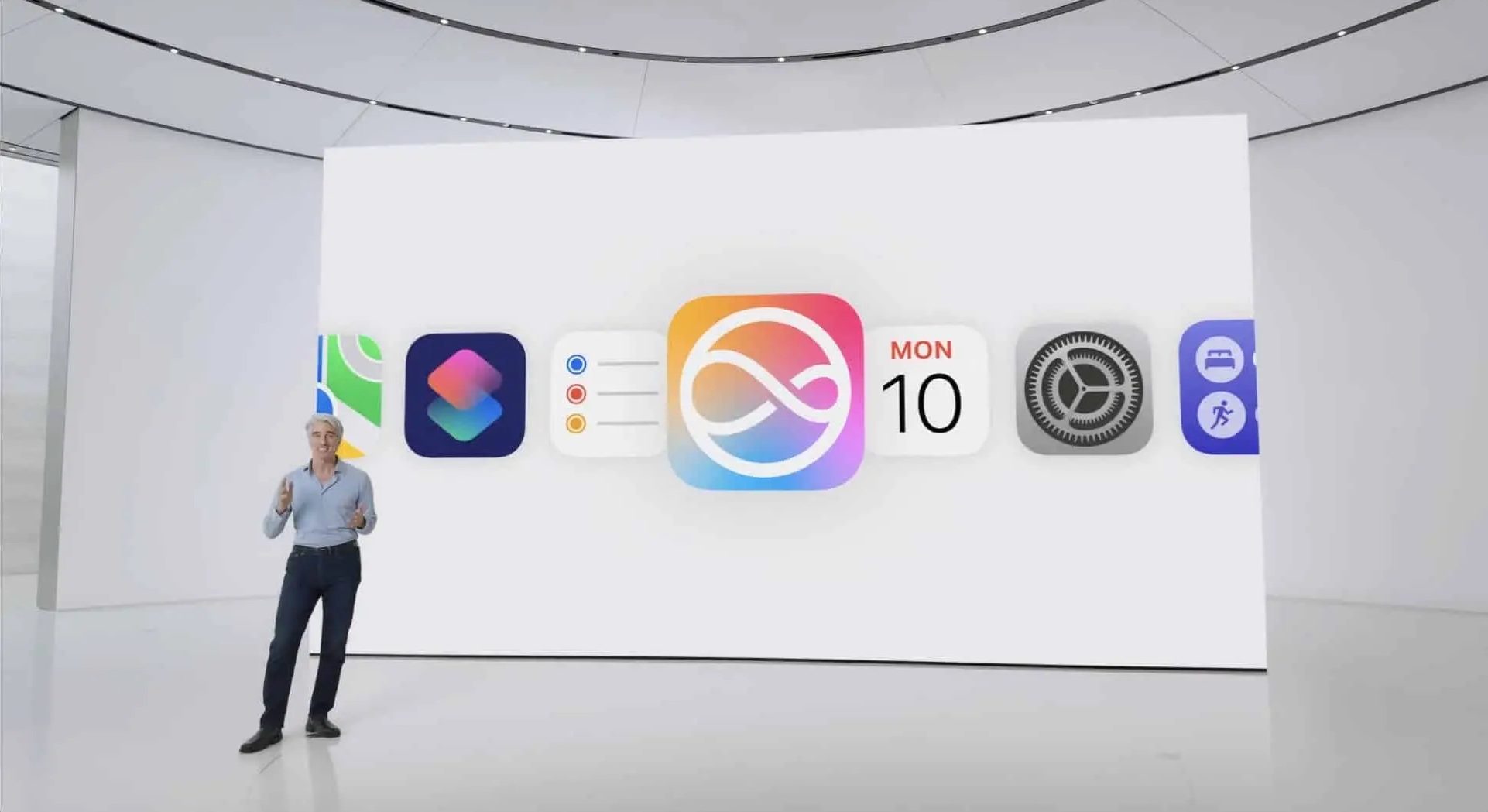
Apple's Two-Tier AI Bet: Google in the Trunk, Apple Intelligence in the Driver's Seat
Let me be direct: the most important reveal buried in today's WWDC keynote wasn't a feature — it was an admission. Apple is shipping a two-tiered AI model architecture for Siri AI, and one of those tiers is Google-powered. Read that again. The company that built its brand on vertical integration is outsourcing parts of its flagship AI assistant to its biggest search rival. This isn't a partnership of equals. This is Apple conceding that its foundation model work, even in 2026, isn't ready to go it alone at the frontier.
The move reframes the entire "Apple Intelligence" narrative. The on-device tier handles privacy-sensitive inference — the stuff that keeps Apple's privacy marketing intact. The cloud tier, powered by Google, handles the heavy reasoning. It's a pragmatic architecture, and I'll give Apple's engineering team credit for admitting reality. But it also means every conversation about "Apple's AI strategy" going forward has to acknowledge that Cupertino is now a Google Cloud AI customer in production, at scale, for the most visible consumer surface it owns.
The bigger signal? The Apple Intelligence feature list looks suspiciously like a 2024 roadmap finally hitting 2026 hardware. Conversational Siri, contextual app actions, deeper app integrations — useful, yes, but not category-defining. The company that once set the pace for mobile interfaces is now in catch-up mode against Gemini Actions in Android Auto, which users are already calling a game-changer in real-world driving scenarios. Apple is no longer defining the category. It's trying not to lose it.
The EU Freeze: Regulatory Gravity Is Now a Product Timeline
Here's the story nobody in Cupertino wanted to answer questions about today: Siri AI is delayed indefinitely in the EU and China. Not "later this year." Not "Q1 2027." Indefinitely. For a company that measures launches in fiscal quarters, that's an extraordinary word choice. It tells you the DMA and its downstream regulatory pressure have moved from compliance nuisance to product roadmap blocker.
This matters more than the keynote itself. The EU represents Apple's second-largest market by revenue, and it's also the regulatory laboratory the rest of the world is watching. When Apple says "indefinitely" about shipping a flagship AI feature in that market, it's effectively conceding that regulatory friction is now a first-order constraint on AI product development — not a bug to be patched later.
Watch what happens next. If Microsoft, Google, and Meta follow Apple's lead and start announcing regional feature carve-outs for AI products, the "global product launch" model that defined 2010s Big Tech is dead. We're heading toward AI products shipping in regulatory tiers, with feature parity becoming a luxury rather than a baseline. I'd bet money we'll see the same pattern from Anthropic and OpenAI within six months. The DMA didn't just change how Apple ships in Europe. It's about to change how every AI lab ships everywhere.
The Infrastructure Counter-Narrative: DUV-Free Chips and the End of TSMC's Monopoly Myth
While the tech press was busy live-blogging Siri's new voice, a story broke out of China that will matter far more in five years. Prinano, a Chinese photonic chip startup, claims to have produced 8-inch wafers using nanoimprint lithography — no DUV stepper required. They're claiming a 90% cost reduction. If even half of that claim holds up under independent verification, the geopolitical foundation of the semiconductor industry just developed a fault line.
The Western assumption for two decades has been that leading-edge chip manufacturing requires ASML's EUV machines, which require American export licenses, which means China stays permanently behind. Photonic chips — chips that use light rather than electricity for computation — sidestep a huge chunk of that equation. They don't need the same transistor density to deliver value, because the physics of optical computation are fundamentally different. Prinano's claim isn't "we made a faster CPU." It's "we made a different kind of chip that doesn't need your lithography tools."
Pair this with the Levelplay cooling innovations out of Computex — magnetic reversible fans, pogo-pin connectivity, AIOs with tactile knobs — and you see a hardware ecosystem that's quietly diversifying. The assumption that hardware innovation only happens at the leading-edge node is starting to look like incumbency bias. Sometimes the disruption doesn't come from doing the same thing better. It comes from doing a different thing.
The Quiet War: NSO, Nation-State Phishing, and Why Your Threat Model Is Wrong
Apple got the keynote. WhatsApp got the story that should keep CISOs awake tonight. The platform disclosed it disrupted a new NSO Group spear-phishing campaign — the same NSO Group whose Pegasus spyware has repeatedly shown up in human rights abuse investigations. This isn't a vulnerability exploit. This is social engineering targeting specific users, and it worked well enough that NSO kept doing it.
Here's what the security industry keeps getting wrong: we keep treating phishing as a user-education problem, and the threat actors keep treating it as a delivery mechanism for million-dollar zero-days. When NSO Group is spear-phishing WhatsApp users, they're not casting a wide net. They're selecting targets, crafting context, and using the platform's own trust signals against the victim. No MFA prompt is going to save you when the attacker knows your name, your colleague's name, and the exact phrasing your CFO uses in wire transfer approvals.
The Iran ceasefire story compounds the urgency. A signed ceasefire didn't slow Iranian-aligned hacking groups one bit — which means the international legal framework for cyberwarfare is, functionally, a politely worded suggestion. WhatsApp disrupting one campaign doesn't disrupt the underlying business model. Until export controls on offensive cyber tooling get the same teeth that export controls on lithography machines do, the NSO Groups of the world will keep operating. The LFI vulnerability story in modern web frameworks is the boring side of the same coin: developers keep assuming the framework handles it, and attackers keep finding the seams. The threat model isn't "what can break." The threat model is "what did the framework's authors not anticipate."
By Q4 2026, at least two of the major AI labs will announce regional feature carve-outs for the EU that mirror Apple's Siri AI pattern — and we'll stop pretending the global launch is the default. The Prinano nanoimprint claim will be independently verified within 90 days, and the conversation about Chinese semiconductor competitiveness will fundamentally shift from "catching up on nodes" to "building a parallel stack." And the next big consumer AI story won't come from a keynote — it'll come from a WhatsApp disclosure. Offense is still winning, and the disclosure-to-regulation pipeline is still measured in years, not weeks.
WWDC 2026 wasn't about what Apple shipped. It was about what Apple couldn't ship, where it couldn't ship it, and who's actually powering the parts it did. The cracks are showing — and the rest of Big Tech is about to walk into the same ones.