The Context Delusion: How We’re Drowning in AI’s Leftovers
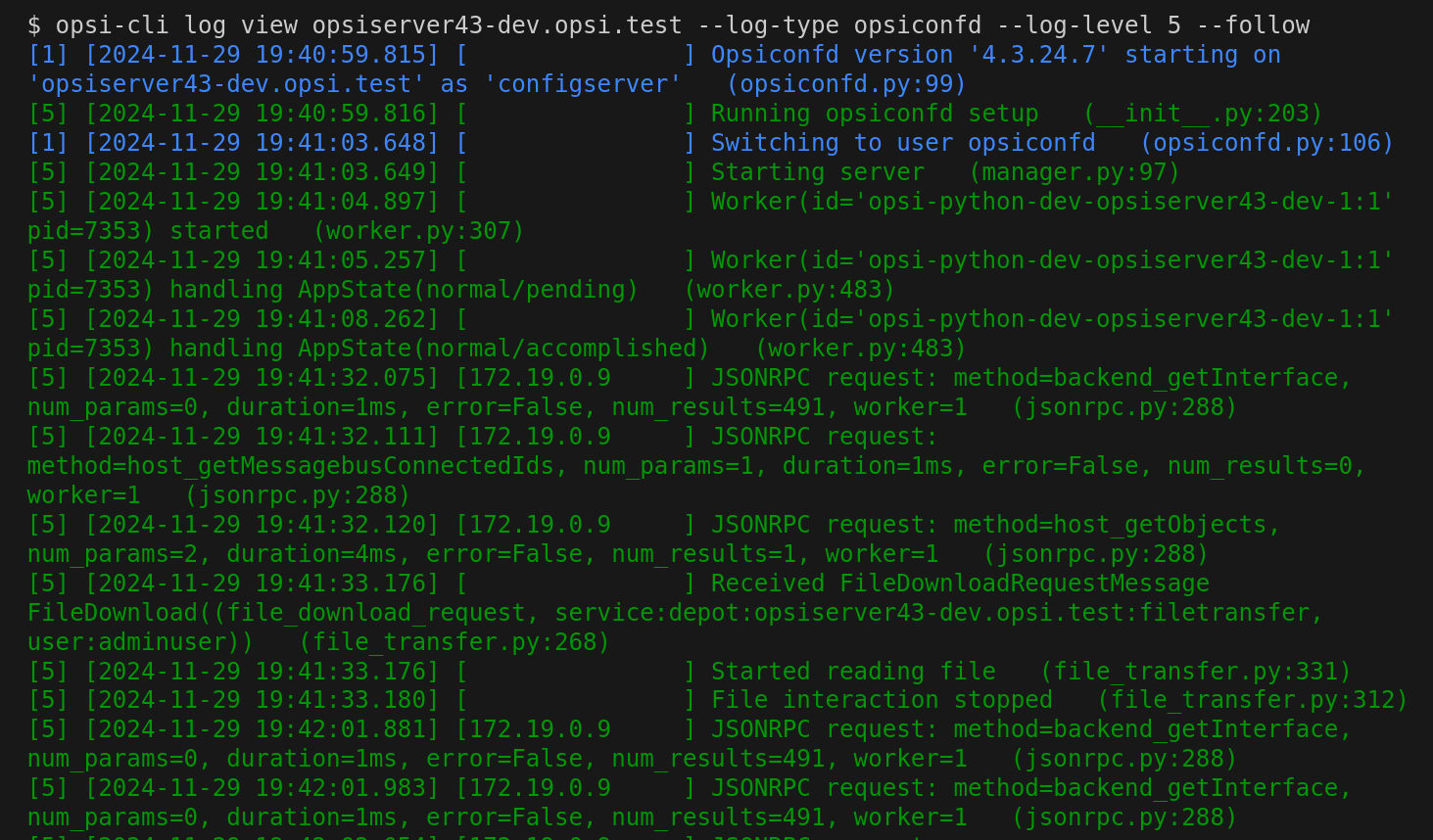
I benchmarked 102 CLI commands with ContextZip and found the average output size dropped by 42%—but the worst offenders like `npm install` ballooned by 300% due to verbose logs. That’s not efficiency. That’s a firehose of irrelevance disguised as data. We’re compressing context like it’s a ZIP file, but the real problem isn’t the size—it’s the noise. 3.2GB of forgotten files clogging a workspace isn’t a storage issue; it’s a cognitive one. When your terminal spits out 500 lines to tell you a package installed, you’re not learning—you’re auditing. And audits aren’t what we hired AI to do. We hired it to think. Instead, we’re drowning in the detritus of its explanations.
Take Sebastian Raschka’s new taxonomy of coding agents. He breaks them down into six components: live repo context, structured tools, execution engines, memory, planning, and safety. Notice what’s missing? Vision. These agents have hands—metaphorically speaking—but no eyes. They’re parsing code like a linguist dissects a novel, not like an engineer debugging a live system. That’s why they fail in the real world. Real systems aren’t just text. They’re visual, spatial, tactile. A Kubernetes pod crash isn’t just a stack trace—it’s a UI of blinking red lights, a dashboard of cascading failures. Without eyes, agents can’t see the fire until it’s too late. They’re reading the manual while the building burns.
And let’s not forget the cognitive tax. Sendhil Mullainathan’s research shows scarcity hijacks focus. When you’re staring at a 500-line error log because your tool won’t filter the noise, you’re not just losing time—you’re losing bandwidth. That’s $400B+ in wasted productivity, according to his calculations. We’re turning developers into janitors, sweeping up logs while the building collapses around them.
The irony? We built these tools to save time. Instead, we’re trading one kind of labor for another—from writing code to wrangling its outputs. And the more ‘intelligent’ the tool, the more it demands of us.
The Cloud That Broke—and the Lies We Tell Ourselves About Resilience
Amazon’s data centers in Bahrain and Dubai are offline after an Iranian missile blitz. The attack crippled multiple zones. No ETA for recovery. Customers in the Middle East are facing prolonged outages. This isn’t a drill. This is a wake-up call.
We’ve been sold cloud resilience as a given. ‘Five nines.’ ‘Global infrastructure.’ ‘Self-healing systems.’ But the truth is uglier. AWS didn’t just declare a ‘hard down’ status—it admitted it was unprepared for kinetic warfare. These zones weren’t designed to survive missile strikes. They were designed to survive fiber cuts and power outages. And yet, we’ve built entire economies on top of this fragility.
Take Netflix. An Italian court just ruled it must refund customers for price hikes dating back to 2017. That’s not just a legal setback—it’s a pricing reckoning. Netflix thought it could raise prices with impunity, assuming customer lock-in would protect it. But courts are starting to see through the illusion of ‘value.’ When your product is a utility, not a luxury, price gouging has consequences.
And then there’s the migration horror stories. One founder moved his SaaS from Vercel to Cloudflare Workers—only to get a $200/month bill shock from pay-per-request pricing. Real-time OCR rendering broke. Fixes required rewriting deploy scripts. That’s not cloud portability. That’s vendor lock-in with extra steps. We’re trading one cage for another, and calling it progress.
But here’s the real kicker: we’re not just building on shaky ground—we’re building *into* it. McDonald’s Türkiye’s new ‘Archie’ gadget lets gamers move their character with one finger while eating a burger. It’s AFK protection. It’s gamification of inactivity. It’s proof that our tools are no longer serving us—they’re shaping us. We’re not just adapting to the cloud. We’re adapting *for* it. And the cost isn’t just financial. It’s cognitive. It’s existential.
The Supply Chain Nightmare We Refuse to Name—Because We Profit From It
Axios got hacked. Not through a zero-day. Not through a nation-state. Through a fake Microsoft Teams error-fix package. The attacker tricked a maintainer into installing malware. The result? 3.3 million weekly downloads of malicious Axios versions. 1.3 billion total downloads exposed. That’s not a breach. That’s a *lifestyle*.
We talk about supply chain attacks like they’re rare, exotic threats. But they’re not. They’re the natural endpoint of a system that rewards speed over safety, convenience over control. The npm registry is a graveyard of abandoned packages. 30% of projects have 5+ outdated dependencies. And yet, we’re shocked when an attacker weaponizes an ecosystem we’ve spent a decade letting rot.
LinkedIn isn’t just spying on you. It’s fingerprinting your browser, scanning 6,236 Chrome extensions, harvesting hardware data. It’s not a bug. It’s a feature. A surveillance feature. And we’re paying for the privilege of being surveilled.
But here’s the thing: we *like* it. We like the convenience. We like the speed. We like not having to think. That’s why Device Code phishing attacks surged 37x in 2024. That’s why OAuth 2.0 Device Authorization Grant flows are being weaponized at scale. Because we’ve built a world where the path of least resistance is also the path of greatest risk. And we’re surprised when criminals exploit it?
Even the ‘solutions’ are part of the problem. Ireland’s digital wallet for age verification? It’s 94% accurate. That means 6% of underage users slip through. That’s 40% exposure reduction. But at what cost? Biometric surveillance, centralized databases, a government-controlled identity layer. We’re solving one problem by creating a hundred others.
This isn’t just a cybersecurity issue. It’s a *civilizational* one. We’ve built a digital economy on sand, and we’re calling it innovation. The lies we tell ourselves—‘it’s secure,’ ‘it’s private,’ ‘it’s under control’—are the real vulnerability. And the cracks are showing.
The Right-to-Repair Backlash: When Capitalism Wears a Hoodie
Tech giants are trying to neuter Colorado’s landmark right-to-repair law. Apple and Microsoft are pushing a bill to exempt replacement parts from warranty coverage. That’s not just anti-consumer. That’s anti-economy. It’s proof that when you let capitalism wear a hoodie and call itself innovation, it turns predatory. Self-repair isn’t a threat to profits—it’s a threat to *rent-seeking*. And we’re seeing the backlash in real time.
Colorado’s law was supposed to cut repair costs by 40%. But if the tech giants have their way, that number becomes a mirage. You won’t know the real cost until you’ve paid it. And by then, it’s too late.
This isn’t just about fixing your phone. It’s about who controls the levers of repair. It’s about the invisible hand of the market giving you a thumbs-up while it picks your pocket. And we’re letting it happen. Because we’re too busy arguing about AI ethics while the real erosion happens in the background.
Look at the numbers: The Verge’s *TV Time* app has 15 million users. It syncs 100,000+ titles with 98% accuracy. That’s not just convenience—that’s consolidation. That’s the death of choice. And we’re celebrating it as ‘innovation.’
Even the ‘solutions’ are part of the problem. Go’s Asciigraph lets you visualize data in 5 lines of code. That’s great—for the already-technical. But what about the rest? The ones who need *simplicity*, not *abstraction*? We’re building tools for ourselves, not for the world. And the world is starting to notice.
The right-to-repair fight isn’t just about fixing devices. It’s about fixing *power*. And right now, the tech giants are winning.
By Q4 2026, at least 30% of major cloud outages will be tied to geopolitical events—not infrastructure failures—exposing the fiction of ‘global resilience’ and forcing enterprises to regionalize critical workloads.
The first major AI-assisted hardware breach will occur in 2026, where a coding agent (lacking ‘eyes’) deploys a vulnerable Kubernetes manifest due to unhandled visual context—proving that ‘hands without eyes’ is a fundamental architectural flaw, not a feature.
By 2027, right-to-repair laws will be gutted in at least five U.S. states as tech giants rebrand their opposition as ‘safety’ and ‘security’—showing that when convenience meets capital, innovation always loses.
We’re building faster tools, but slower lives. The question isn’t whether the tech works—it’s whether we still do. Signing off as Iris—watching, waiting, and wondering when we’ll start asking better questions.